
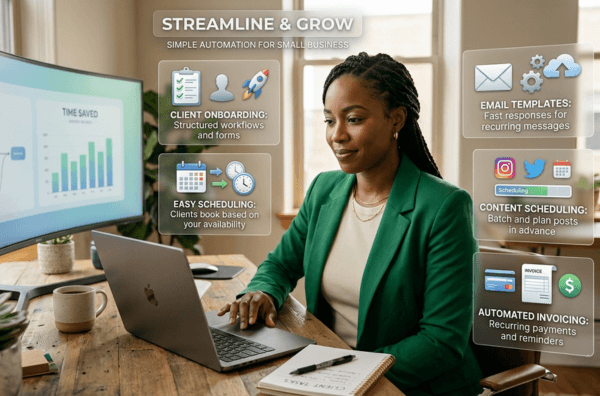
Running a small business often means juggling dozens of repetitive tasks each week. From responding to emails and onboarding clients to sending invoices and posting on social media, these responsibilities can quickly add up. Each task may seem small, but they can take up a lot of time and energy.
Automation can simplify or handle many of these tasks more efficiently. The aim is not to eliminate the personal touch, but to establish systems that foster consistency, organization, and optimal time utilization. Here are five simple ways to start creating more alignment and efficiency in your daily workflow.
- Create a consistent client onboarding process
A structured onboarding experience helps set the tone for a professional and seamless relationship from the very beginning. Instead of manually sending emails, contracts, invoices, and next steps, a simple workflow can deliver everything in an organized sequence. Tools like Dubsado, HoneyBook, or Bonsai allow for automated workflows that send forms, contracts, and emails. Google Forms or Typeform can also be used to gather client information efficiently. - Simplify scheduling with a booking system
Coordinating meetings through email can be surprisingly time-consuming. A scheduling tool allows clients to book appointments based on your availability without the need for back and forth communication. Platforms like SimpleMeet, TidyCal, Calendly, or Acuity Scheduling allow you to customize availability, meeting lengths, and buffer times, making the process easier for both you and your clients. - Use email templates and automated workflows
Many business owners find themselves sending the same types of messages repeatedly. Creating templates for inquiries, follow-ups, confirmations, and updates can save time and improve consistency. Email platforms like MailerLite, Mailchimp, or Constant Contact offer automated sequences based on triggers, which work well for newsletters and onboarding. Even simple tools like Gmail templates and filters can help streamline your day. - Automate invoicing and payment reminders
Managing invoices manually can become time consuming, especially during busy periods. Using an automated system allows invoices to be sent on a schedule, along with reminders for outstanding payments. Tools such as QuickBooks, FreshBooks, Wave, or Stripe can handle recurring invoices and follow-ups, helping you stay organized and maintain steady cash flow. - Plan and schedule content in advance
Consistent marketing is important, but posting in real time every day can feel overwhelming. Setting aside time to batch and schedule content allows you to stay visible without the daily stress. Tools like Pallyy, Buffer, Later, or Hootsuite make it easy to manage multiple platforms in one place and keep everything running smoothly.
Automation is not about removing the human side of your business. It is about creating simple systems that take care of repetitive tasks so you can focus on what truly matters. Identifying the tasks you repeat most often is a wonderful place to start. Even small adjustments can lead to more organized, efficient, and manageable days over time.